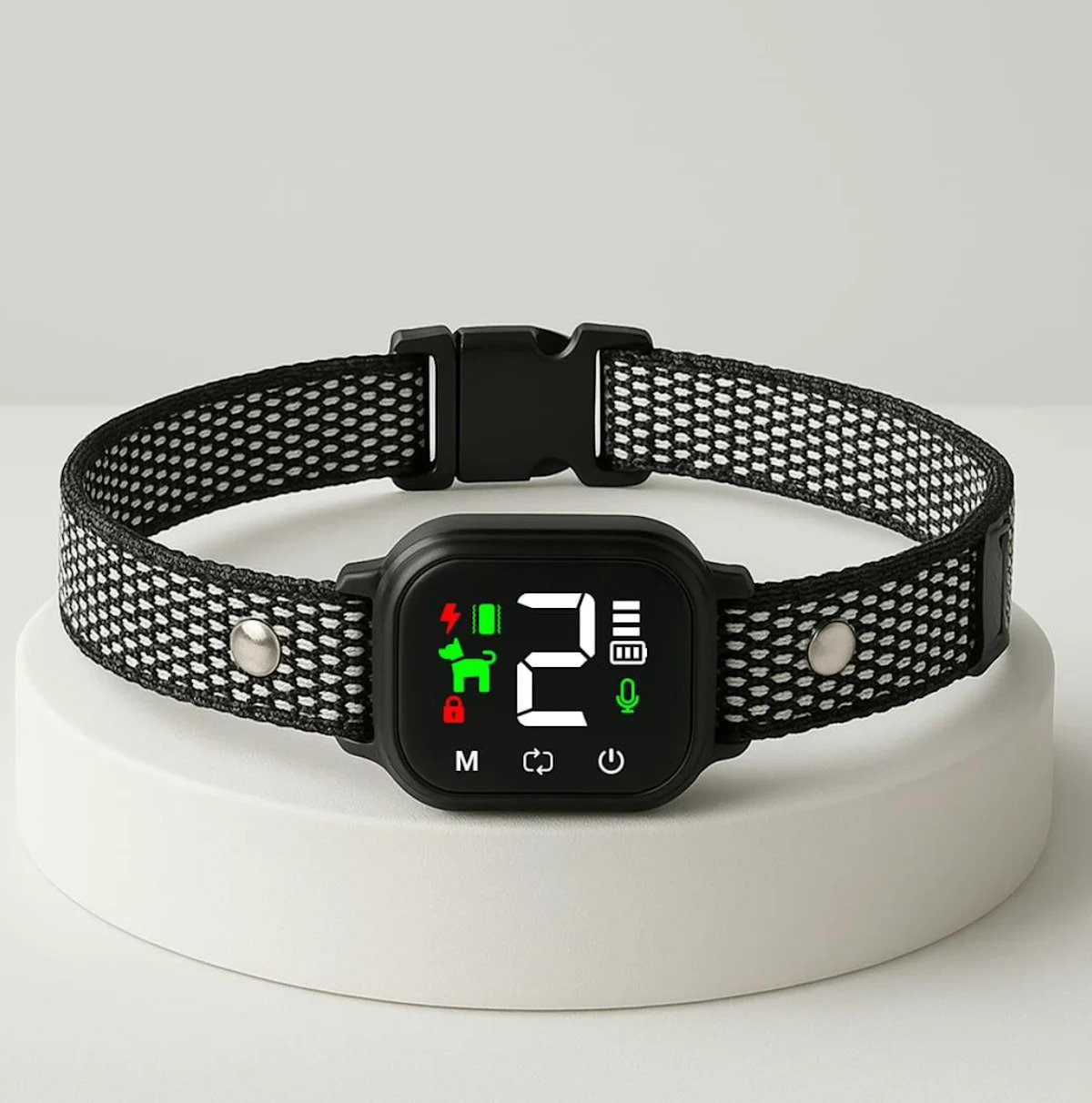
If your dog barks at every sound, passerby, visitor, or movement outside the window, you already know how frustrating excessive barking can become. It can disturb your household, annoy neighbors, and make everyday situations harder to manage. This is where products such as the NooBark Anti-Bark Collar are marketed as a convenient way to discourage unwanted barking.
But does an anti-bark collar actually work? Is NooBark comfortable for dogs? How does it detect barking, and is it suitable for every dog?
In this detailed NooBark Anti-Bark Collar review, we’ll look at how the product is intended to work, its potential benefits and limitations, how to use it responsibly, and what buyers should consider before ordering.
Important: An anti-bark collar should be viewed as a training aid—not a replacement for understanding why a dog is barking or addressing behavioral, environmental, or medical causes.
What Is the NooBark Anti-Bark Collar?
The NooBark Anti-Bark Collar is a wearable dog-training device designed to discourage excessive or unwanted barking. The basic idea is straightforward: when the collar detects barking, it provides a corrective stimulus intended to interrupt the behavior and encourage the dog to stop.
Unlike manually operated training devices, an automatic anti-bark collar is designed to respond when barking is detected.
This can be particularly appealing to owners dealing with repetitive barking when they aren’t immediately beside their dog.
However, effectiveness can vary considerably depending on the individual dog, the reason for barking, the collar’s fit and settings, and how it is incorporated into an overall training routine.

How Does NooBark Work?
The exact features and operating modes can vary by model, so buyers should check the specifications of the particular NooBark collar they are purchasing.
Generally, anti-bark collars work through a combination of bark detection and corrective feedback.
When the device identifies barking, it may provide an audible warning, vibration, or another correction depending on its design and selected settings.
The intended training sequence is simple:
Dog barks → collar detects barking → warning/correction occurs → dog pauses barking.
With consistent training, the dog may begin associating excessive barking with the interruption and become less likely to bark unnecessarily.
The important point is that the collar should not simply be left on a dog indefinitely with the expectation that it will solve the underlying problem automatically.
Why Do Dogs Bark Excessively?
Before buying any anti-bark product, it is worth asking a more important question:
Why is the dog barking?
Barking is normal canine communication. Dogs may bark because they are:
- Alerting you to something
- Excited
- Seeking attention
- Frightened
- Bored
- Frustrated
- Responding to other dogs
- Protecting territory
- Experiencing separation-related distress
- Reacting to unfamiliar people or environments
An anti-bark collar may interrupt the behavior, but it doesn’t necessarily address the underlying reason.
For example, if a dog is barking because it is anxious when left alone, simply suppressing the barking may not resolve the anxiety.
That is why responsible training should combine behavior management with appropriate exercise, enrichment, socialization, and positive reinforcement.
Key Features to Look For
When evaluating a product like NooBark, don’t focus only on the marketing claims. Look at the actual features and whether they match your dog’s needs.
1. Bark Detection
Automatic bark detection is one of the most important features.
A quality system should attempt to distinguish the dog’s bark from ordinary environmental sounds. However, no detection system is guaranteed to be perfect.
2. Multiple Training Modes
Some anti-bark collars offer several modes, such as:
- Sound
- Vibration
- Adjustable correction levels
Having different settings can be useful because dogs have different temperaments and sensitivities.
3. Adjustable Sensitivity
Sensitivity controls can help reduce accidental activation caused by nearby dogs or loud noises.
This is particularly important if you live in an apartment, have multiple dogs, or frequently encounter barking dogs nearby.
4. Adjustable Collar
A secure but comfortable fit is essential.
The collar should not be excessively tight. At the same time, it needs to remain positioned correctly for the detection system to function properly.
5. Rechargeable Battery
A rechargeable design can be more convenient than constantly replacing disposable batteries.
Before purchasing, check the stated charging time, battery life, and charging method.
6. Weather Resistance
If you intend to use the collar outdoors, check its actual water- and weather-resistance rating rather than assuming it is waterproof.

NooBark Anti-Bark Collar Benefits
There are several reasons dog owners may consider an anti-bark collar.
Helps Interrupt Repetitive Barking
For some dogs, an interruption can break the barking cycle and redirect their attention.
This can be particularly useful when barking has become repetitive or habitual.
Convenient Training Aid
Owners don’t need to manually operate the device every time barking occurs if the collar includes automatic detection.
Adjustable Settings Can Improve Flexibility
Different dogs respond differently to training methods. Adjustable modes may allow owners to start with less intrusive feedback and determine what works appropriately.
Useful in Certain Situations
An anti-bark collar may be helpful in situations where excessive barking is difficult to manage manually, provided the dog’s welfare and underlying behavioral needs are also addressed.
Portable
Because it is worn by the dog, the collar can potentially be used during appropriate outdoor activities as well as at home, depending on the manufacturer’s instructions.
NooBark Anti-Bark Collar Potential Drawbacks
No product is perfect, and an honest review should consider the disadvantages as well.
It May Not Work for Every Dog
Dogs have different personalities and different reasons for barking. A device that helps one dog may have little effect on another.
False Activations Can Occur
If the detection system isn’t able to distinguish your dog’s bark from surrounding sounds, the collar could potentially activate unnecessarily.
It Doesn’t Fix the Root Cause
A collar can interrupt barking, but it cannot automatically teach a dog better behavior in every situation.
Improper Use Can Cause Problems
Leaving a training collar on continuously, using unnecessarily strong settings, or fitting it incorrectly can create discomfort or stress.
Behavioral Training Is Still Important
The best results generally come from combining management tools with appropriate training rather than depending on a device alone.
Is NooBark Safe for Dogs?
Safety should be the first consideration when using any electronic or corrective training collar.
The device should be used according to its manufacturer’s instructions and appropriate veterinary or professional training guidance.
Owners should pay attention to signs of discomfort or stress, including:
- Excessive scratching around the collar
- Skin irritation
- Avoidance behavior
- Trembling
- Unusual fear
- Whining
- Excessive panting
- Behavioral changes
If any concerning reaction occurs, discontinue use and seek professional advice.
The collar should also be removed regularly so the dog’s neck and skin can be inspected.
For puppies, elderly dogs, dogs with medical conditions, or dogs with significant anxiety or fear-related behavior, getting advice from a veterinarian or qualified behavior professional before using a corrective collar is especially sensible.
How to Use an Anti-Bark Collar Responsibly
If you decide to try NooBark, responsible use is more important than simply putting the collar on your dog.
Step 1: Identify the Trigger
Watch when the barking happens.
Is it caused by visitors? Other dogs? Cars? Boredom? Being left alone?
Understanding the trigger helps you choose the right training approach.
Step 2: Start With the Least Intrusive Setting
If the collar offers multiple modes, start with the gentlest appropriate option.
The goal should be to interrupt unwanted behavior—not frighten or hurt the dog.
Step 3: Reward Quiet Behavior
This is extremely important.
When your dog stops barking and becomes calm, provide appropriate positive reinforcement.
The dog should learn:
Quiet behavior = reward.
Step 4: Combine With Training
Use commands such as “quiet,” redirect attention, provide enrichment, and remove unnecessary triggers where possible.
Step 5: Monitor Your Dog
Don’t assume that because the collar is automatic, you don’t need to observe your dog.
Watch how your pet responds and adjust your approach accordingly.
NooBark vs Traditional Dog Training
An anti-bark collar and conventional training don’t necessarily need to be competing solutions.
A collar may provide an interruption, while training teaches the dog what behavior you actually want.
For example:
Trigger → barking → interruption → quiet → praise/reward
Over time, the objective is for the dog to learn an alternative response rather than simply becoming afraid of barking.
This distinction is important.
The most effective long-term strategy is usually behavior modification + environmental management + positive reinforcement, with any device used only as an appropriate supporting tool.
Who Might Consider NooBark?
The product may be worth researching if you have a dog that:
- Barks repeatedly at environmental triggers
- Responds to sounds outside the home
- Has developed habitual barking
- Needs additional training reinforcement
- Is otherwise healthy and suitable for collar-based training
However, it may not be the right solution for dogs whose barking is primarily associated with severe fear, anxiety, pain, or separation-related distress.
In those situations, identifying and treating the underlying issue should take priority.

Who Should Think Twice Before Using It?
You should exercise additional caution if your dog is:
- Extremely fearful or anxious
- Showing aggressive behavior
- Very young
- Elderly or medically vulnerable
- Experiencing unexplained behavioral changes
- Developing skin irritation around the neck
If excessive barking suddenly begins in a previously quiet dog, don’t immediately assume it is simply a training problem. A veterinary evaluation may be appropriate because sudden behavioral changes can sometimes have an underlying medical cause.
NooBark Anti-Bark Collar: Is It Worth Buying?
Whether NooBark is worth buying depends largely on your expectations.
If you’re expecting a collar to completely eliminate barking without any training, it may disappoint you.
But if you view it as one potential tool within a broader training strategy, it may be worth considering.
The most important factors are the collar’s actual features, build quality, detection performance, adjustability, comfort, battery performance, warranty, and return policy.
Don’t purchase solely because an advertisement promises an instant solution.

Final Verdict
The NooBark Anti-Bark Collar is designed around a simple concept: detect unwanted barking and provide feedback intended to interrupt the behavior.
Its biggest potential advantage is convenience. Instead of manually reacting to every bark, an automatic collar can provide feedback when barking occurs.
However, no anti-bark collar should be considered a magic solution.